The Science of Play: How Early Play Shapes Lifelong Skills
April 29, 2026
If your child comes home from kindergarten talking mostly about the games they played, the…
If your child comes home from kindergarten talking mostly about the games they played, the blocks they built or the stories they acted out, you may wonder how much learning is really happening.
The answer may be more than you think.
In early childhood education, play gives children opportunities to explore ideas, practise new skills and make sense of the world around them. This is the thinking behind play-based learning, where everyday activities become part of how children develop language, early maths, problem-solving, independence and social skills.
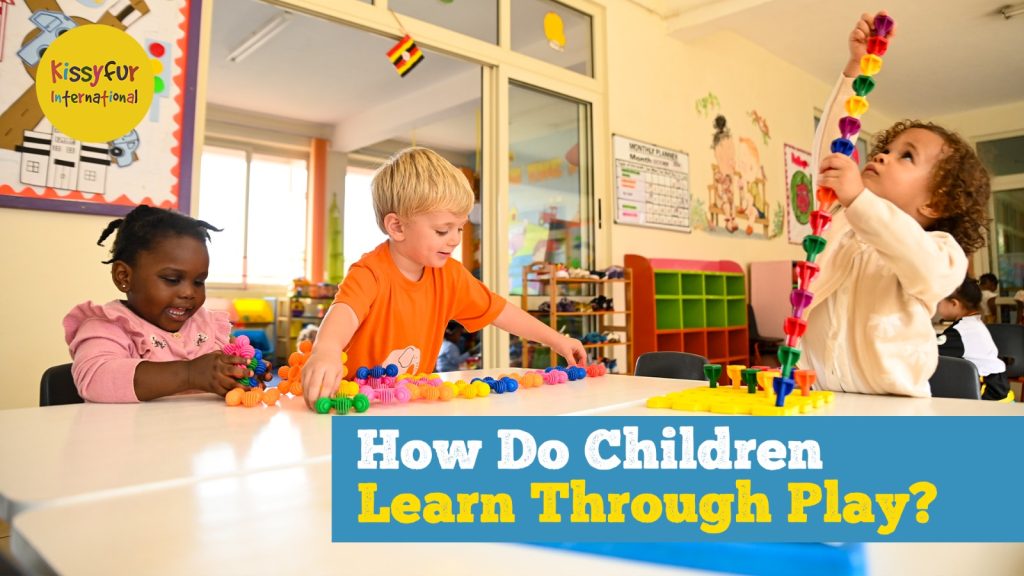
A simple building activity can introduce ideas around size, shape, balance and counting. Puzzles encourage concentration and problem-solving, while pretend play gives children opportunities to use language, imagination and memory as they listen, share ideas and work with others.
Play-based learning does not mean children simply spend the day playing without direction. Well-planned activities help children develop particular skills while still allowing them to explore, make choices and participate naturally. Teachers think carefully about the materials, activities and spaces children interact with and step in where guidance or encouragement is needed.
At Kissyfur International School, this forms part of the “PLAY-WAY” method of education. The programme is based on the idea that thoughtfully planned play can challenge children to learn while helping them enjoy the process. This approach is also reflected in guidance from Uganda’s National Curriculum Development Centre, where play is recognised as an important way for young children to gain knowledge and skills.
Children at Kissyfur are introduced to pre-reading, pre-writing and pre-maths concepts through simple, age-appropriate activities. Counting may happen while arranging objects during play, while language develops through stories, conversations and imaginative games. Drawing, puzzles and handling small objects can also help build some of the control needed for early writing.
For parents, this is important because progress in the early years does not always come home on a worksheet. Sometimes it appears in conversation. A child may begin explaining an idea more clearly, recognising a pattern, remembering the sequence of a story or completing something independently that once required help.
This is also where some of the benefits of play-based learning become easier to see. Through learning and play, children begin developing skills that support confidence, independence, kindergarten readiness and preparation for primary school.
A great deal of early learning also happens through interaction with other children. When children play together, they practise taking turns, expressing what they need, listening to others and working through the small disagreements that naturally happen in a group. They also begin to recognise that other people may have different ideas and ways of doing things.
At Kissyfur, children are encouraged to take part in classroom and school activities, while teachers recognise that children develop at different rates and may respond differently to new experiences. Participation is encouraged without forcing children to take part before they are ready.
Play also works best when children understand boundaries. A play-based classroom still needs clear expectations, routines and respect for others. Children learn how to use materials appropriately, follow classroom rules and become familiar with what happens throughout the school day.
At Kissyfur, children are guided with respect. When correction is needed, the school uses time-out and respectful guidance, with no physical disciplinary measures.
For parents searching for a kindergarten in Kampala, nursery school in Kampala, preschool in Kampala or daycare centre in Kampala, it can be useful to look beyond whether a school simply says children “learn through play.” The same applies to families considering a kindergarten or preschool in Entebbe.
Ask what that play actually looks like. How are teachers involved? What skills are children developing? Are there opportunities to communicate, create, move, solve problems and gradually become more independent?
At Kissyfur International Kindergarten and Day Care Center, with branches in Bugolobi, Kampala and Entebbe, learning through play remains an important part of the Early Years experience.
Play-based learning can look simple from the outside. Yet within those games, conversations and everyday activities, children are building skills that support their development now and in the stages that follow.