What Career Day Reveals About How Children Begin to Shape Their Future
April 29, 2026
Most parents have seen it happen at home. A familiar song comes on, and a…
Most parents have seen it happen at home. A familiar song comes on, and a child who was busy with something else suddenly begins moving, humming or repeating a line they remember. Music has a way of drawing children in before they fully understand the words.
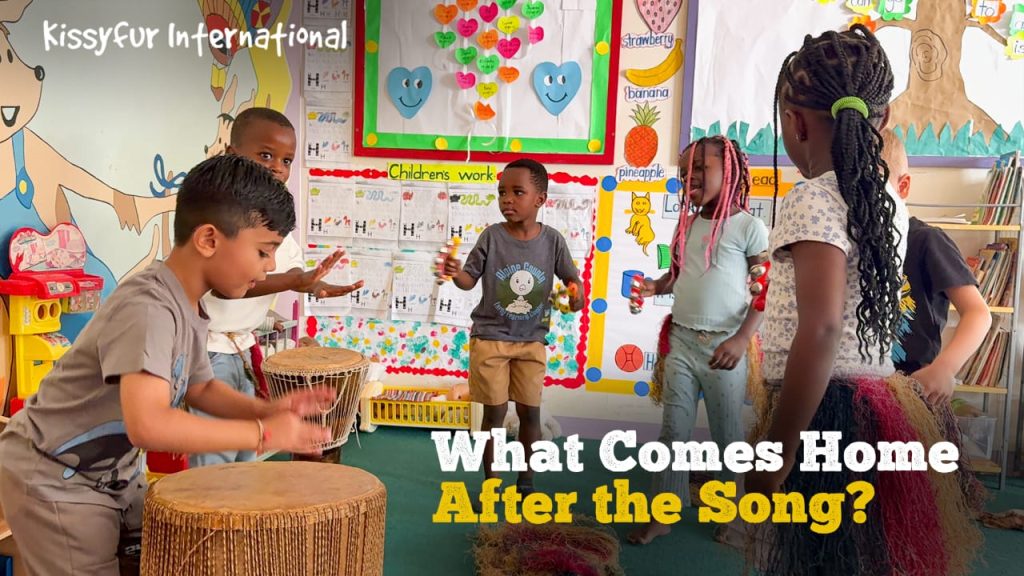
The same thing happens in kindergarten. One child may join immediately, while another watches from the side and slowly begins to copy a movement. A few minutes later, both are taking part in their own way. That small change can tell us a great deal about what music makes possible during the early years.
For young children, music is closely connected to how they learn. Repeated words and melodies help them remember new language, while rhythm gives them something familiar to follow. A song can make an unfamiliar word easier to say because the child has heard it several times and can connect it to an action, sound or expression.
This is one of the ways a thoughtfully prepared international nursery school can support children’s early communication and language development through experiences they genuinely enjoy.
Parents often notice this when a child brings a song home. They may not remember every line perfectly, but they recall the rhythm, repeat a phrase or begin teaching the movements to someone else. The learning has travelled beyond the classroom because the child has made the experience their own.
Music also invites children to move, and movement matters greatly at this age. Clapping, stepping, turning and playing a simple instrument require them to listen while using their bodies with greater control. They begin to notice when to move, when to pause and how to follow the rhythm alongside others.
As they enjoy the activity, they are also developing coordination, balance and concentration. These skills grow naturally because the child is focused on the song rather than on getting every movement right.
Music also gives children a chance to learn with one another. They wait for a turn, share an instrument, follow a friend’s movement and respond to their teacher’s cue. Some will lead confidently, while others need a little more time before joining. When children are allowed to participate at their own pace, music can help them feel more comfortable within the group.
In a classroom where children bring different languages, family traditions and experiences, music can help everyone find a way to join in. This is especially meaningful within an international school environment, where learning together also means becoming familiar with different cultures and ways of expressing oneself.
During music sessions at Kissyfur International Pre-Kindergarten and Day Care Center, children are introduced to a wide variety of songs, rhythms and movement activities. Traditional music is part of that experience, with songs such as Kwajanga Amazina Nsekula Masetule shared alongside other familiar and new pieces.
Some children may recognise the words or rhythm, while others are hearing them for the first time. As they dance, play instruments and follow the movements together, the song becomes something the whole group can experience.
For a child who already knows the song, that familiarity can feel reassuring. For another, it offers an early introduction to a culture they may not have encountered before. Through music, children begin to discover that different languages, sounds and traditions can still bring people together.
This matters in an international school community, where children bring different languages, family traditions and experiences into the classroom. They begin to understand those differences by listening to another language, trying a new movement and joining a song that may come from someone else’s home or heritage.
For parents considering an international kindergarten in Uganda, these moments offer a clearer picture of how children learn, connect and settle into a diverse environment. They also show why families comparing preschools in Kampala often look beyond the classroom programme to consider how children are encouraged to participate, express themselves and feel part of the group.
Finding the right nursery school in Kampala, Uganda, is also about choosing an environment where a child can become comfortable with others while developing confidence in their own abilities and identity.
The song may end after a few minutes, but it often returns later in the car, around the dinner table or during play at home. Children carry the words, movements and memories with them, and much of the learning comes home too.