What Age Should a Child Start Kindergarten in Uganda?
October 13, 2026
Some mornings move faster than parents would like them to. A quick breakfast. A packed…
Some mornings move faster than parents would like them to.
A quick breakfast. A packed school bag. One more reminder to wear shoes properly before rushing out into traffic, meetings, errands, and everything else the day brings. Yet somewhere within that routine is the same quiet thought many parents carry, hoping their child feels safe, comfortable, understood, and happy while away from home.
Modern parenting has changed in many ways, and so has the understanding of early childhood education.
Today, many families are looking beyond traditional academics during the early years. Parents are paying closer attention to how children are cared for, how they interact with others, how they communicate, and how learning is introduced at an age where curiosity, movement, and play still shape so much of childhood.
This shift is part of why conversations around International Pre School Kampala environments continue to grow. Preschool is no longer viewed only as preparation for primary school. For many families, it becomes one of the first environments where children begin learning how to navigate the world outside home while still being guided gently through their early stages of growth.
One may ask, what exactly happens during preschool?
The answer is often much broader than people expect.
Many International Pre Schools Kampala families consider today focus on holistic development rather than placing pressure on traditional academics too early. Learning is introduced in ways that feel engaging and natural for young children, often through storytelling, movement, creativity, music, conversation, and play.
Social and emotional development forms a large part of this experience.
Children begin learning how to share spaces with others, cooperate during activities, express feelings, communicate needs, build friendships, and gradually understand emotions in ways they can process at their age. These everyday moments quietly help shape confidence, empathy, patience, and social awareness over time.
Language development also begins taking shape naturally during preschool years.
Through storytelling, singing, tracing, classroom conversations, and interactive activities, children strengthen listening skills and expand their vocabulary. They begin recognizing letters, identifying sounds, and slowly becoming more comfortable expressing themselves through words and play.
Basic numeracy is introduced just as gently.
Through counting games, matching activities, puzzles, shapes, and sorting objects, children begin understanding numbers and patterns without learning feeling forced or overwhelming. Much of this happens through hands-on experiences that keep children engaged while helping them absorb concepts gradually.
Motor skills are another important part of early childhood development.
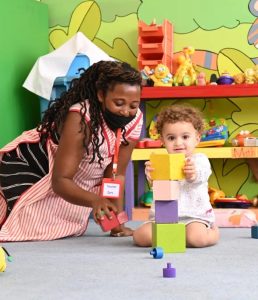
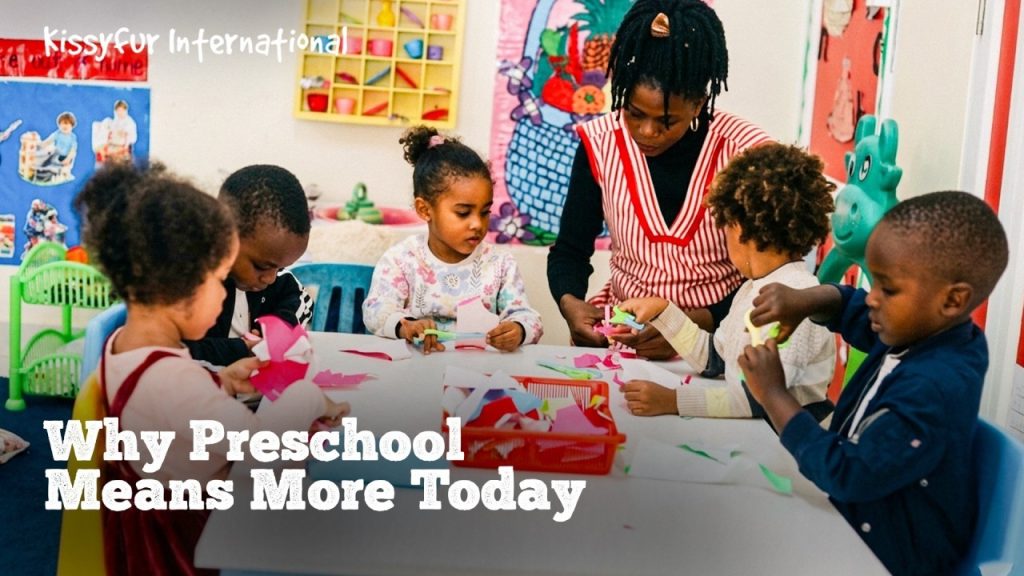
Fine motor skills develop through drawing, painting, threading, building blocks, cutting paper, and using playdough, all helping children strengthen coordination and prepare for future writing tasks.
Gross motor skills develop through running, balancing, climbing, jumping, dancing, and outdoor play, helping children build confidence, movement, coordination, and physical awareness while simply enjoying being active children.
This balance between care, play, learning, movement, and routine is part of what makes preschool environments meaningful during the early years.
Children are not expected to sit through long hours of rigid academic instruction. Instead, they move through experiences designed around the way young children naturally learn best through interaction, exploration, repetition, and play.
For many parents, this understanding also brings reassurance.
In the middle of demanding schedules and busy routines, there is comfort in knowing that a child is spending their day in an environment built around care, engagement, structure, and development. Preschool becomes more than a place children attend during the day. It becomes part of a family’s rhythm, offering consistency for children while helping parents move through work and responsibilities with greater peace of mind.
This is one reason many families searching for an International School Kampala or International Nursery School environment are paying closer attention to the overall experience children receive during these formative years.
Because during early childhood, growth is not always loud or obvious.
Sometimes it appears quietly through confidence during play, curiosity in conversations, improved communication, growing independence, and the comfort children begin developing within familiar environments.
And perhaps that is why preschool continues to hold such an important place in modern family life today, not simply because children are learning numbers and letters, but because they are slowly learning how to grow into themselves.