What Age Should a Child Start Kindergarten in Uganda?
October 13, 2026
There’s a quiet moment every parent notices on Sports Day. Not the race itself, but…
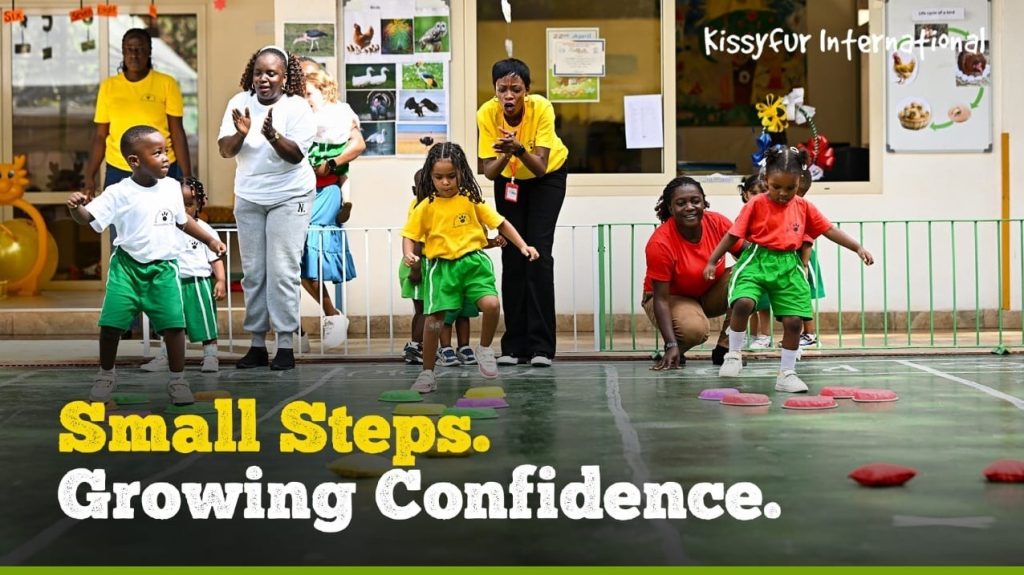
There’s a quiet moment every parent notices on Sports Day.
Not the race itself, but the pause before it begins, the look, the small step forward, the decision to try.
It’s easy to think of Sports Day as a lively break from routine, a day filled with movement and excitement. But within an international kindergarten environment, it carries a deeper purpose. It becomes a space where children begin to understand themselves in relation to others, how to take part, how to wait, how to try, and how to keep going, even when something feels new.
In these early years, learning is not limited to the classroom. It happens in open spaces, in shared moments, and in experiences that allow children to move, explore, and connect. Sports Day brings this to life in a way that feels natural. Through simple activities and group participation, children begin to experience cooperation without being taught it in a formal sense. They learn by doing, by standing beside a classmate, by joining in, by observing and then stepping forward when they feel ready.
For parents, these moments often hold the most meaning. Watching a child take part, even in the smallest way, can feel significant. There is something powerful in seeing them navigate a new environment with growing ease. A child who once hesitated may begin to engage more freely. A quick glance across the field to check if a parent is watching. A small smile that follows. These are the moments that stay.
Confidence at this stage does not arrive all at once. It builds gradually, shaped by experiences where children feel supported and included. Sports Day offers that kind of environment. There is no pressure to perform, only an invitation to participate. And in that space, children begin to trust themselves a little more.
Within international schools, experiences like these are thoughtfully included because they support the whole child. Physical activity plays an important role in early development. It helps build strength, coordination, and balance, while also supporting overall well-being. Children who engage in regular movement tend to feel more energized and focused, which naturally carries into their classroom experience.
Beyond the physical, there is also a sense of emotional growth that unfolds quietly. Children begin to understand what it means to be part of a group. They learn to celebrate small wins, not only their own, but those of others. They begin to develop patience, resilience, and an early sense of belonging. These are not lessons delivered through instruction, but through experience.
Some moments don’t need much to stand out, they simply stay with you.
During our Sports Day 2026 at Kissyfur International School, Kampala we saw smiles, effort, and a range of emotions come through as children, parents, and teachers came together in a way that felt natural and easy. The day moved at a steady, easy pace, with moments of activity giving way to time to pause and take it in. Children shifted between excitement and focus, parents watched with a quiet sense of connection and pride, and teachers guided gently, giving each child the space to experience the day in their own way.
It is in these shared experiences that the value of an international kindergarten education becomes more visible. The intention is not simply to create memorable days, but to create meaningful ones. Days where children are given the space to grow across different areas of development; social, emotional, and physical without feeling overwhelmed.
Sports Day also highlights something that is sometimes overlooked: the importance of movement in shaping how children feel. When children are given the opportunity to run, jump, and explore freely, they begin to understand their own capabilities. They become more more comfortable in their movements, and more confident in how they express themselves.
Over time, these experiences begin to form a foundation. A child who feels confident in participating will carry that forward into other areas of learning. A child who understands teamwork in play will begin to apply it in group activities. A child who feels seen and supported will approach new experiences with greater ease.
For parents exploring international schools, moments like Sports Day offer a glimpse into how learning is approached beyond academics. They show how environments are created to support not just what children know, but who they are becoming. The focus remains on nurturing individuality while also helping children feel part of a wider community.
What stands out most is not the structure of the day, but the feeling it leaves behind. A sense of ease. A sense of growth. A quiet understanding that something meaningful has taken place, even if it is not immediately defined.
And perhaps that is what makes Sports Day such an important part of early years education. It brings together movement, connection, and experience in a way that feels both simple and lasting. It allows children to explore, to try, and to find their place within a shared moment.
Because in the end, it is not about the races or the outcomes. It is about the small steps taken along the way. The willingness to try. The comfort in being part of something. The quiet confidence that begins to grow.
And for many parents, that is more than enough to hold on to.