What Age Should a Child Start Kindergarten in Uganda?
October 13, 2026
Many parents today are trying to raise children in a world that rarely slows down.…
Many parents today are trying to raise children in a world that rarely slows down. Between school routines, screen time, busy work schedules, and carefully planned activities, childhood can sometimes begin to feel more structured than free. Days move quickly, and for many families, finding balance has quietly become one of the biggest parts of parenting.
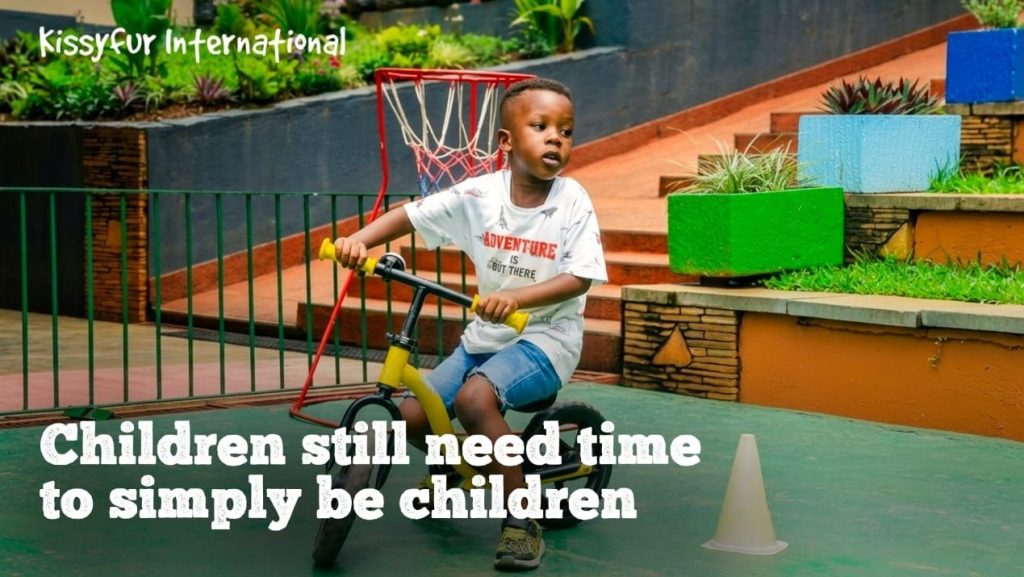
It is something more people are beginning to notice in everyday life. Children are spending less time outdoors than previous generations did, and more time indoors moving between routines, screens, and highly supervised activities. Even moments that once felt simple, like playing outside after school, riding bicycles with friends, or creating imaginary games together, are becoming less common for many children.
This shift has not happened because parents care less. In many ways, parents today are more involved than ever before. Families are trying to make thoughtful decisions about education, safety, schedules, and opportunities while also balancing the demands of modern life. Often, everything is done with good intention and the hope of giving children the best possible start.
At the same time, there is growing conversation around what children may be missing when every part of the day becomes planned. Research around early childhood development continues to show how important free play, movement, outdoor interaction, and social engagement are during the early years. These experiences support much more than entertainment. They shape communication, confidence, emotional awareness, creativity, and the way children learn to interact with the world around them.
For young children especially, some of the most meaningful learning happens naturally. It happens during conversations with friends, outdoor play, storytelling, imaginative games, group activities, and moments where children are simply given space to explore and participate in their own way. Confidence often develops quietly through these experiences. Sometimes it begins with something as small as joining a group activity willingly, expressing themselves more openly, or feeling comfortable enough to try something new.
This is part of why many parents looking at International Schools in Kampala are paying closer attention to how a learning environment feels for their children, not only what is being taught in the classroom. Families are increasingly looking for spaces where children can settle in comfortably, interact socially, and experience a balance between learning, play, and routine.
Across many International Pre-School and International Kindergarten environments, there is growing appreciation for approaches that allow children to develop at their own pace while still feeling guided and supported throughout the day. In the early years, development is rarely only about academics. It is also about emotional wellbeing, social confidence, curiosity, communication, and helping children feel secure enough to engage with the world around them naturally.
For children between 18 months and 6 years old, these early experiences often shape how they approach learning and relationships later on. Some children thrive within full-day programmes running from 8:00am to 6:00pm, while others benefit from shorter days that end earlier in the afternoon. What matters most is often finding a rhythm that supports both the child and the family in a way that feels steady and manageable.
There is also something valuable about environments where children still have opportunities to move, play outdoors, interact freely with others, and experience moments that are not constantly rushed. Simple parts of childhood continue to matter deeply. Playing with friends, listening to stories, engaging in music and movement, spending time outdoors, or even navigating small social moments all contribute to a child’s overall growth in lasting ways.
Childhood today may look different from previous generations, and technology will continue to shape how children learn and interact with the world. Still, many parents are beginning to reflect more carefully on the pace of early childhood and the importance of creating space for children to simply be children.
Because in many ways, the moments children often carry with them are not always the most scheduled ones. They are the ordinary moments of feeling included, encouraged, curious, active, and comfortable enough to grow naturally within the world around them.