Small Steps, Lasting Confidence: Rethinking Sports Day in Early Learning
May 24, 2026
Imagination is one of the earliest ways children begin to understand the world. It often…
Imagination is one of the earliest ways children begin to understand the world. It often starts in the simplest ways.
A child picks up a toy stethoscope and suddenly becomes a doctor.
A cardboard box turns into a car, a plane, or something entirely imagined.
In these small, everyday moments, children aren’t just playing, they’re exploring ideas of who they could become.
What looks like play is often something deeper; the beginning of how they understand the world and their place in it.
Long before structured learning takes shape, children are already observing, interpreting, and forming ideas about what they see around them. Through everyday experiences, conversations, and environments, they begin to build a quiet awareness of roles, possibilities, and identity.
This is how imagination develops, not in isolation, but through exposure.
And in the early years, it becomes a powerful tool for growth.
It shapes how children think, how they express themselves, and how they begin to see their own potential. It builds confidence, encourages curiosity, and allows them to explore different versions of who they might become, freely and without pressure.
Sometimes, this shows up in the most visible ways.
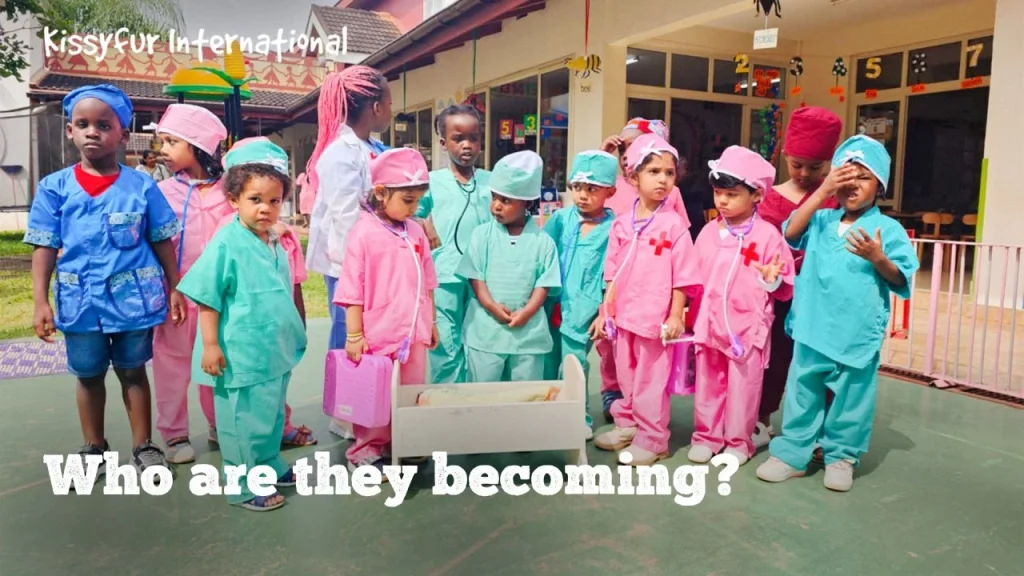
In one recent classroom moment, children were invited to come dressed as who they would like to be in the future.
What followed was more than just a creative activity; some showed up as Doctors, Pilots, Chefs, Teachers, Firefighters among others. Each choice reflected something deeper; a connection to what they have seen, what they admire, or what has sparked their curiosity.
This is where the value of role play becomes clear.
When children step into these roles, even briefly, they begin to explore identity in a way that feels natural and safe.
They try things out, express ideas, and build a sense of self without limitation.
Research in early childhood development shows that imaginative play supports cognitive flexibility, language development, and social understanding. But beyond that, it also shapes belief; what a child feels is possible for them.
And that belief matters.
Because the range of what a child is exposed to often influences the range of what they imagine.
When children are in environments that are thoughtful, supportive, and rich with different possibilities, they begin to think more openly. They ask more questions. They express themselves more freely. And over time, they begin to form a sense of direction, even if it is still evolving.
These early expressions may seem small, but they are often the first signs of confidence taking shape. Not forced. Not defined. But explored.
Because before children become anything, they first imagine it.
And when that imagination is nurtured in the right environment, it doesn’t just shape how they learn, it shapes how they see themselves, what they believe is possible, and how confidently they begin to step into the future.