What Children Carry Home from Music Time
August 3, 2026
Ever watched a toddler stack blocks, chase a ball, or get completely lost in make-believe…
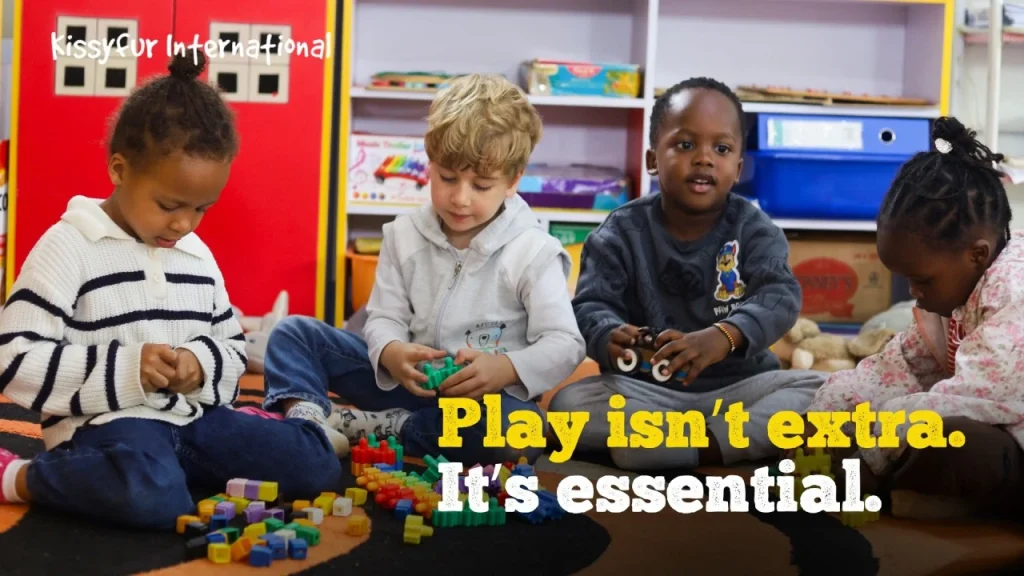
Ever watched a toddler stack blocks, chase a ball, or get completely lost in make-believe and wondered, “Are they really learning anything?” The answer is: they are learning everything.
Research consistently shows that early play shapes how children think, relate to others, solve problems, and build confidence. The skills developed in those early years don’t fade, they compound over time.
Structured play i.e; building challenges, guided group games, small collaborative projects does more than keep children engaged. It develops focus, patience, teamwork, and communication.
In these shared experiences, children practice critical thinking, problem-solving, and expressing their ideas clearly. They learn to navigate challenges in safe, supportive environments preparing them for real-world situations ahead.
Unstructured play , on the other hand, is where imagination thrives. It gives children the freedom to explore, make independent decisions, and discover at their own pace.
Whether experimenting with art materials, building imaginary worlds, moving freely, or mimicking everyday activities, children are learning through curiosity. They test ideas, adapt when things don’t go as planned, and develop creativity and independent thinking.
When structured and unstructured play work together, learning becomes experiential not just instructional.
Children don’t simply absorb information; they build resilience by trying again, empathy through interaction, and confidence by making choices. They begin to see mistakes not as failures, but as part of growth.
Over time, even simple activities like sorting colors, stacking patterns, imaginative role-play strengthen cognitive ability, emotional awareness, and social intelligence.
Investing in meaningful play is not just about early education. It is about nurturing confident, capable individuals equipped to think critically, collaborate effectively, and adapt in a changing world. The foundations built through play today shape the problem-solvers, innovators, and leaders of tomorrow.
Parents and educators ; what is the most powerful skill you’ve seen a child develop through play?