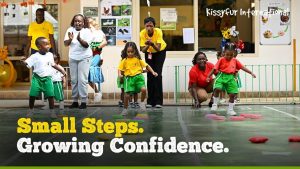
Small Steps, Lasting Confidence: Rethinking Sports Day in Early Learning
May 24, 2026
There’s a moment most parents recognize. A child walks into a room full of unfamiliar…
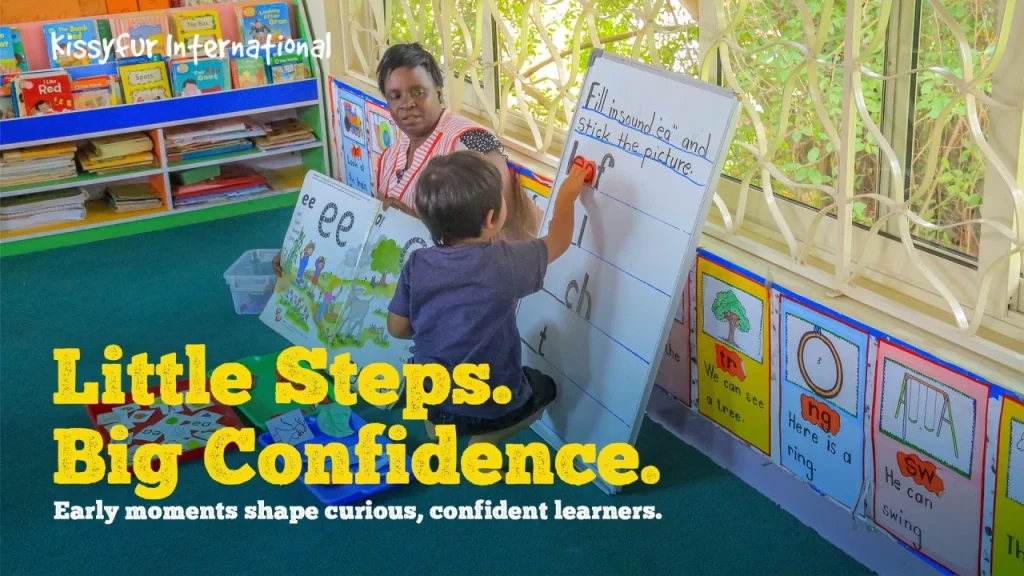
There’s a moment most parents recognize.
A child walks into a room full of unfamiliar faces and holds your hand just a little tighter. And then slowly, they let go. Confidence doesn’t arrive fully formed. It’s built in tiny, repeated moments of safe exposure.
In early childhood, exposure is everything.
Not exposure in the dramatic sense but in the everyday sense: Trying a new activity, speaking in front of peers, solving a small conflict, hearing a new story from a different culture or asking a question without fear.
Between ages 2 and 6, the brain develops at a speed that will never be matched again. Neural pathways form rapidly, shaped by experience. The environment a child interacts with becomes the architecture of how they think, respond, and see themselves.
Confidence isn’t taught through instruction.
It’s formed through experience.
When children are given structured opportunities to explore through play, storytelling, music, outdoor learning, group projects they aren’t just “kept busy.” They are learning how to navigate uncertainty.
They learn:
Exposure in early years builds adaptability, one of the most critical skills in today’s fast-changing world.
A confident child is not the loudest in the room.
It’s the one who feels secure enough to try. And that kind of confidence doesn’t come from pressure. It comes from the environment.
As parents and educators, perhaps the real question isn’t: “Is my child ahead academically?” But rather: “Is my child comfortable exploring the unknown?”
Because global citizenship doesn’t begin at university.
It begins the first time a child feels brave enough to raise their hand.
Little steps today. Big confidence tomorrow.